Wednesday, July 8, 2015
Marc Platt: Writing Like Salvador Dali
Interested in reading a novel that will challenge you? Then seek out Time's Crucible, the first installment in the Cat's Cradle trilogy, written by Marc Platt. The author previously wrote "Ghostlight," a Doctor Who TV story that had most fans scratching their heads after the last episode aired. But in this novel he surpasses himself, and once again, it's the Seventh Doctor and his companion Ace who have to navigate their way through the chaos unleashed in their lives.
We find the Doctor and Ace in an English cafe, and Ace is looking forward to the Baked Alaska she's just ordered. Suddenly, the world seems to go out of phase, as if laws of reality are breaking down. The Doctor's sensitivity to Time cause him to run back to the TARDIS. Sorry Ace, no Baked Alaska for you.
At first, they can't get into their time machine, as the door has disappeared. But eventually the Doctor finds a way inside. He leaves Ace by the console, warning her to stay there, and that she will receive a valuable item she must protect at all costs. Then he disappears, the console delivers up a scroll, and something bursts through the walls of the time machine.
Ace finds herself in a damaged city. She links up with a group of other young people, who tell her that the TARDIS collided with their own time/space vessel. Then they are attacked by chitinous guards. Those of her colleagues who are captured have helmets forced on their heads, and then take on the bug-like appearance of the guards. Ace flees outside the city, where she sees the Doctor, or the ghost of the Doctor, a silver cat, and a river of mercury. She discovers that there are several areas of the city, each one operating in a different time zone, and inhabited by older or younger versions of herself and her new friends. Soon, she will find herself climbing onto, fighting, and hiding from the chitinous guards in a tower that strides across the rubble-strewn land.
In the early 1970s Third Doctor story "The Time Monster," the Doctor threatened to Time Ram his TARDIS into the same physical space as the Master's. The collision of these two vessels, each containing so many different interior dimensions, would create a cosmic extinction event. That is what seems to have happened here, when the TARDIS and the ship piloted by Ace's new friends collided. Certainly the laws of cause and effect seem discombobulated, with the walking towers, and even clocks that climb off their pedestals and crawl across the land. What does the cat symbolize? Is the river of mercury somehow related to the fluid link that the First Doctor claimed was essential to operating the TARDIS? And why does the city seem to be gradually compacting?
There are lots of mysteries here, and even when I reached the end of the novel, I was still scratching my head, considering all I had read, and wondering how all the various pieces of the narrative fit together. The story was as dense in ideas, and rich in interest, as "Ghost Light." It may not qualify as well constructed fiction, but Time's Crucible certainly constitutes a glorious work of imaginative art.
Dragon Dave
Monday, July 6, 2015
The Final Word on Appaloosa: A Difficult Western
In Ed Harris' film "Appaloosa," an adaptation of Robert B. Parker's novel, it's easy to understand someone like Randall Bragg, a villain fixated upon his goals, regardless of their cost to others. He speaks well. He demonstrates a better understanding of Ralph Waldo Emerson, and how his essays and poems compare to other writers, than Virgil Cole can ever hope to achieve. He has made influential friends. He knows what he wants, and when he discovers he cannot get it by force, he retools his approach, and works the legal and political system.
It's more difficult to understand people like Virgil Cole, who doesn't abuse his power and authority, who trusts his friend Everett Hitch completely, and grants Allie an undeserved and unconditional love. It's difficult to understand Hitch, who seemingly has little interest in "the Law," dismissing it as "a way of feeing easy about earning a living as a gunman." It's difficult to understand Allie, who wishes above all to be a lady and be loved, but cannot see farther ahead than the present moment. And no one wants to plunk down their money, and walk away from a movie with more questions than answers.
These days, we also expect lots of action from our films. Instead, "Appaloosa" shows us heroes who achieve most of their goals without the sort of unrealistic, over-the-top movie violence that we can never practice in our own lives. For example:
Life in the Old West was so full of hardships and dangers that, just like Virgil Cole, Everett Hitch, and Allie French, the early farmers, ranchers, and residents of small towns like Appaloosa were occasionally forced to make significant moral compromises. Today, when we have instant access to information, and capabilities that frontier settlers could only have dreamed of, we don't like to talk in terms of compromises. We don't like to believe that life still demands compromise, that every decision we make and every action we take is a compromise, and that the compromises we make define our characters and futures. Perhaps that's partly why Westerns have fallen out of favor, especially in the cinema. Just like its more action-orientated contemporary "3:10 To Yuma," and the big concept film "Cowboys And Aliens," "Appaloosa" barely recouped its production costs at the box office. Still, it was a labor of love for Ed Harris and everyone else on the production, all of whom accepted less money than they normally charge in order to make this little twenty million dollar movie.
I rarely watch Westerns, and I never read them, but the protagonists in "Appaloosa" make me want to read Robert B Parker's novel and its three sequels. In retrospect, Randall Bragg seems almost irrelevant, whereas Virgil Cole, Everett Hitch, and Allie French continue to fascinate me. Despite their differences, and all the circumstances that should tear them apart, these seemingly simple yet complex characters still make sacrifices for each other. I want to see the world through their eyes, understand the choices they make, and accompany them during the later portions of their lives. I imagine that's the way actor Ed Harris felt, when he committed himself to co-writing, directing, producing, and acting in "Appaloosa," after reading just a few chapters of Robert B Parker's novel.
Dragon Dave
![]() |
| Virgil Cole, Mrs. Allie French, and Everett Hitch |
It's more difficult to understand people like Virgil Cole, who doesn't abuse his power and authority, who trusts his friend Everett Hitch completely, and grants Allie an undeserved and unconditional love. It's difficult to understand Hitch, who seemingly has little interest in "the Law," dismissing it as "a way of feeing easy about earning a living as a gunman." It's difficult to understand Allie, who wishes above all to be a lady and be loved, but cannot see farther ahead than the present moment. And no one wants to plunk down their money, and walk away from a movie with more questions than answers.
These days, we also expect lots of action from our films. Instead, "Appaloosa" shows us heroes who achieve most of their goals without the sort of unrealistic, over-the-top movie violence that we can never practice in our own lives. For example:
![]() |
| When Everett Hitch sees Bragg's men approaching, he races to warn Virgil Cole. |
![]() |
| Virgil Cole talks Bragg's men into leaving, instead of carrying out the violent rescue they intended, and without a single shot being fired. |
Life in the Old West was so full of hardships and dangers that, just like Virgil Cole, Everett Hitch, and Allie French, the early farmers, ranchers, and residents of small towns like Appaloosa were occasionally forced to make significant moral compromises. Today, when we have instant access to information, and capabilities that frontier settlers could only have dreamed of, we don't like to talk in terms of compromises. We don't like to believe that life still demands compromise, that every decision we make and every action we take is a compromise, and that the compromises we make define our characters and futures. Perhaps that's partly why Westerns have fallen out of favor, especially in the cinema. Just like its more action-orientated contemporary "3:10 To Yuma," and the big concept film "Cowboys And Aliens," "Appaloosa" barely recouped its production costs at the box office. Still, it was a labor of love for Ed Harris and everyone else on the production, all of whom accepted less money than they normally charge in order to make this little twenty million dollar movie.
I rarely watch Westerns, and I never read them, but the protagonists in "Appaloosa" make me want to read Robert B Parker's novel and its three sequels. In retrospect, Randall Bragg seems almost irrelevant, whereas Virgil Cole, Everett Hitch, and Allie French continue to fascinate me. Despite their differences, and all the circumstances that should tear them apart, these seemingly simple yet complex characters still make sacrifices for each other. I want to see the world through their eyes, understand the choices they make, and accompany them during the later portions of their lives. I imagine that's the way actor Ed Harris felt, when he committed himself to co-writing, directing, producing, and acting in "Appaloosa," after reading just a few chapters of Robert B Parker's novel.
Dragon Dave
Friday, July 3, 2015
Mrs. Allie French, Steam Trains & Faithless Israelites
![]() |
| Mrs. Allie French steps off the train in Appaloosa. |
Actress Renee Zellweger has played a number of important roles, but for me, three of her performances tower above all others. These include 1) her role of author Beatrix Potter in the biopic "Miss Potter;" 2) Her role of Novalyne Price, the woman author Robert E. Howard loved, in "The Whole Wide World," and 3) her role of Mrs. Allie French in Ed Harris' excellent Western "Appaloosa." In Allie French, she takes on a real complicated woman, and makes us feel for her. It's a wonder that someone so dedicated to the law and justice like Virgil Cole would take up with someone like Allie. But then, Allie is the first woman with whom he's tried to have a real relationship.
While reading Raising Steam by Terry Pratchett, I was initially puzzled by the need for the trains to stop for water. Steam locomotives burned coal, wood, or oil for their power, right? Wrong. Steam is produced from boiling water, and the combustible materials heat the boiler that makes the water boil that produces the steam. Right? After reading Terry Pratchett's Fantasy novel, it was interesting to watch "Appaloosa," and see a real nineteenth-century steam train chugging up a grade in New Mexico. When it stops beside a water tower, a metal spout swings down that will supply water to the engine. Cole puts away his volume of Ralph Waldo Emerson's essays and poems, and asks Hitch to help him survey their surroundings. The lawmen are transporting Randall Bragg, a rancher convicted of murder, to the place where he will be executed. As the lawmen step outside the carriage, two hired gunmen ride into sight.
Between them rides Allie, whom they will shoot unless Cole releases his prisoner. So Cole ignores proper procedure, and lets Bragg go, even though he knows the gunmen won't release Allie. Yet Allie seems to view Cole's response as a sort of betrayal.
Cole and Hitch pursue the party, and track them down moments before the group are attacked by Indians. Cole sees enough in that brief glimpse to realize that Allie has gotten intimate with the head gunman. What is she thinking? Is she suffering from Stockholm Syndrome, or is something else going on here?
The two men help the others fight off the Indians, but as they are all in danger, Cole agrees to put off their differences until they reach their destination. Then he sidles up to Allie, and lets her lean into his back, but he can't look at her, not yet.
Later that evening, she tells Cole that Hitch tried to kiss her, back on that day when Cole sent Hitch down to the building site of their new house. Cole's worked with Everett Hitch for too long to believe that. Still, he loves Allie, and when all the business with the Indians, Bragg, and the gunmen is over, he takes her back. He freely admits he's never had much business with women. Yet something in him loves Allie, and will forgive her anything. He continues to court her, and treat her tenderly. As for Allie, she seems to love Cole, and want to be with him all the time. Yet when he's not around, she feels an instinctive need to be with the man she deems to be in charge of the situation in that moment.
A familiar Old Testament theme is that the Israelites continually loose faith in God and worship the gods of other nations. After watching "Appaloosa" again recently, it struck me that Allie is like the Biblical Israelites: constantly afraid of what will happen next, and who will protect her when the next bad thing occurs. Fear drives her to actions she's not proud of. In comparison, Virgil Cole is like God. He loves Allie, and will always love her. His love for her is unconditional. It's called agape love. It's an ideal that all of us aspire to, but few, if any of us, truly live up to.
Dragon Dave
Wednesday, July 1, 2015
Robert B Parker & Ed Harris on Complicated Women
![]() |
| Red Rock Canyon in California, USA |
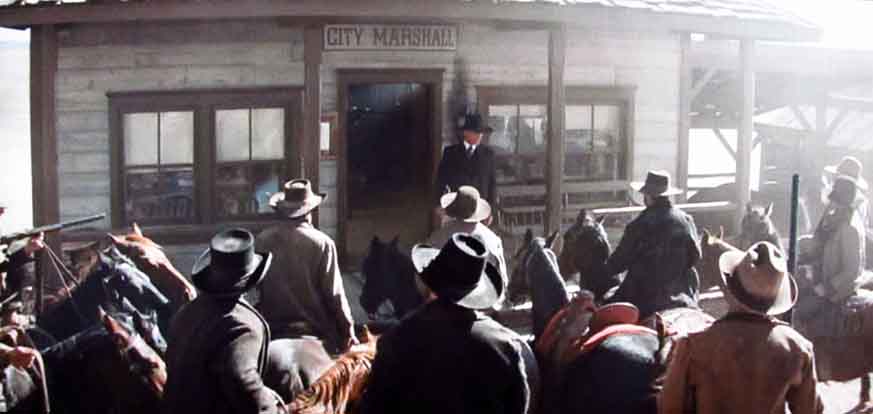
In Ed Harris' movie "Appaloosa," based on the Western novel by author Robert B Parker, city marshall Virgil Cole is the ultimate impersonation of a benevolent dictator. Cole has no interest in accumulating wealth for himself, or extending the power and influence of Appaloosa by conquering nearby towns or businesses. He may have his flaws, but essentially he's a man like Gerald Skibbow in Peter F Hamilton's novel The Reality Dysfunction, who believes in simple values, and expects his citizens to respect the rights of others.
He may beat up a drunk in the saloon for not leaving when he tells him to, or for using foul language in front of the woman he's falling in love with, the beautiful Mrs. Allie French. Nevertheless, he doesn't hurt others out of a desire to do so. In fact, he relies on his friend Everett Hitch to make sure he doesn't cross the line and abuse the authority he has been entrusted with. In those rare moments when he loses control, he wants Hitch to restrain him, to hold him back, when his emotions temporarily overwhelm him. And Cole always tells the truth. Always.
"No one always tells the truth," Mrs. French tells him, shortly after she gets off the train and finds employment playing the piano in Appaloosa's saloon.
"I always figured telling the truth was easier." Virgil Cole shrugs. "Tell a man what you think."
"And a woman?" she asks.
This question flusters Cole, and seems to embarrass him.
If Virgil Cole is easy to understand, Mrs. French, or Allie as she prefers to be called, is more difficult. She wears fine clothes, yet has no money. She smiles often, yet speaks demurely, and with lady-like grace. Cole quickly takes to her, and within a few days, he buys a house for them already under construction in Appaloosa, which surprises his friend Everett Hitch. Allie seems equally in love with Cole, yet one day he walks back to the Marshall's office, complains Allie is fretting, and over seemingly inconsequential things such as curtain material.
![]() |
| Hitch: These are a little small for curtains, aren't they? Cole: Get off with you, you rascally varmint! |
Cole asks his friend to go calm her down. When Hitch arrives at the worksite, deserted due to a windstorm, she shows off the foundation and rough framing, and expounds on their great plans for the house. Her eyes gleam with all the hope, joy, and pride she takes in her future with Cole. But then she pulls Hitch into her arms and kisses him passionately.
Hitch pulls away, and explains, like a father to a child, that they are both with Cole, but he and Allie are not together. She frowns (something she rarely does in public), pulls away, and asks him to leave. Hitch says nothing of the incident to his friend. Still, he can't help but wonder at the kind of woman to whom Cole has pledged his heart.
But then, Allie French is a complicated woman.
Dragon Dave
Tuesday, June 30, 2015
Virgil Cole's Contemplation: The Complete Emerson
Just in case you wondered what passage Virgil Cole was reading from, here's the complete paragraph. Try taking a breath after completing each sentence, before rushing on to the next.
What I must do is all that concerns me, not what the people think. This rule, equally arduous in actual and in intellectual life, may serve for the whole distinction between greatness and meanness. It is the harder, because you will always find those who think they know what is your duty better than you know it. It is easy in the world to live after the world's opinion; it is easy in solitude to live after our own; but the great man is he who in the midst of the crowd keeps with perfect sweetness the independence of solitude.
--from his essay on "Self-Reliance" by Ralph Waldo Emerson
Words to live by, I think you'd agree.
Dragon Dave
Related Internet Links
Emerson Central
Monday, June 29, 2015
Lawman Versus Gunman
While "Appaloosa" shared sets and locales with films like "3:10 To Yuma" and "Cowboys And Aliens," author Robert B Parker and director Ed Harris was more concerned with exploring the type of people who would try to settle an untamed land. Central to the story are the lawmen who keep the peace. Virgil Cole and Everett Hitch don't talk much. To Ed Harris, they're the type of men who could ride side-by-side all day, never say a word to each other, and be perfectly content with the nature of their camaraderie. In fact, Cole seems a stranger to words, a man who uses them when necessary, but sparingly, knowing they can inflict as much harm as the guns he wields. Cole frequently looks to Hitch to help him find the appropriate words in a given situation. But what he lacks in education, he makes up with determination, by reading noteworthy authors like Ralph Waldo Emerson, and attempting to embody the ideals he finds in their books.
"Everett, listen to this," Cole says one day, looking up briefly from his leather-bound volume of Emerson. "What I must do is all that concerns me," Cole reads slowly and haltingly, "not what the people think."
Everett Hitch regards his friend somberly, and nods in reply.
Later, when enforcing the law proves tricky in Appaloosa, sidekick Everitt Hitch suggests that they are gunmen first, then lawmen. If they know what's right, maybe it's okay to bend the law in this one instance, for the sake of the greater good. Virgil Cole's answer is straight-forward and immediate. He simply wouldn't know how to look at himself, if he saw himself as anything other than a lawman first.
As SF authors such as Ray Bradbury, Robert Heinlein, and Allen Steele have suggested, it'll take strong, forceful characters to establish self-sufficient colonies on other worlds. People like Gerald Skibbow, Father Horst Elwes, and Quinn Dexter in Peter F Hamilton's novel The Reality Dysfunction will all attempt this in their own ways. But when the people of such a colony are looking for someone to establish the law and maintain the Peace, they could do much worse than employ someone Virgil Cole, and his loyal friend Everett Hitch.
Dragon Dave
Friday, June 26, 2015
Ed Harris Makes A Sci-fi Western
In "Appaloosa," the movie version of Robert Parker's novel, Ed Harris plays Virgil Cole, a gunman who earns his living by serving as the city marshall in small, frontier towns. He's ably served by his stalwart sidekick Everett Hitch, played by Viggo Mortensen. When he and his friend Everett Hitch reach Appaloosa, the aldermen explain how Randall Bragg (played by Jeremy Irons), a local rancher, has shown contempt for the laws and people of their small town.
![]() |
| Sci-fi fans may remember Jeremy Irons from "Eregon", "Dungeons And Dragons," and "The Time Machine." |
Bragg and his hired hands have stolen, raped, and killed. They murdered the town's previous marshall, and will continue their nefarious ways until someone stops them. The aldermen may be scared, but they don't understand the mentality of the man they want to hire. Cole's has one condition for accepting the job: if he serves as marshall, the Law in Appaloosa will be any law he feels is appropriate.
![]() |
| Timothy Spall, who plays one of the aldermen, is known for his roles in "Enchanted," "Lemony Snicket's A Series of Unfortunate Events," and as Peter Pettigrew in the Harry Potter films. |
When the aldermen point out that they'd be effectively turning control of their town over to him, Cole's sidekick Everett Hitch points out that they've already ceded control of their town to Bragg. Or, as Cole puts it, in his colorful way, "Everything that eats meat likes a dead buffalo." But they quickly learn that he means business. Within a few minutes of their signing his agreement, two of Bragg's men lay dead at their feet.
"Appaloosa" defies our expectations of a western. There are no big shootouts with gunmen falling off rooftops, no great explosions that destroy half the town, no sweeping tales of revenge, and no maddened horses pulling a carriage packed with travelers toward the edge of a cliff. Nor do aliens swoop in at night, and carry off people and cattle in their spaceships. No one even paints all the buildings in the town red. But for me that's part of its charm, and why I feel the film has a Sci-Fi element. For much of Science Fiction literature involves settling other planets. Consider Ray Bradbury's book The Martian Chronicles, or Kim Stanley Robinson's Mars trilogy, many of Robert Heinlein's novels, or Allan Steele's excellent Coyote series. When people decide to plant themselves on a new planet, they leave civilization behind, and start anew. "Appaloosa" reminds us of that.
"Appaloosa" may be a small movie, but it deserves to be seen. Hopefully the actors in it, many notable for their other Sci-Fi and Fantasy roles, will help make the movie palatable for them. After all, we're all drawn to actors, and I'd never heard of "Appaloosa" or Robert Parker before I saw the movie in the DVD aisle. I had simply seen Harris and Mortensen in another movie together, and wanted to see them together again, so I bought the DVD. I'm glad I did.
Dragon Dave
Thursday, June 25, 2015
Oh, the People I've Met: Peter F Hamilton
I've never met Robert B. Parker, but I have met Peter F. Hamilton. Hamilton's a hero of mine, as he wrote the mammoth Night's Dawn trilogy. (The first novel in the trilogy is one of my all-time favorite books, The Reality Dysfunction). The trilogy was published in the United States as six hefty paperbacks.
The pages are filled with well-rounded characters, richly developed societies, spectacular space battles, and all of it backed up by incredibly speculative science. The saga easily holds its own against recent Marvel galactic events such as Infinity and The Black Vortex. It was a pleasure to meet the author of such an accomplished literary masterwork, and I was able to do so in Brighton, at the 2013 World Science Fiction Convention.
It takes a strong, forceful author to envision, write, complete, and push through publication such a mammoth story. But Peter F Hamilton did it. For me, the Night's Dawn trilogy is right up there with Tolkien's The Lord of the Rings, or Kim Stanley Robinson's Mars trilogy, or Frank Herbert's Dune saga. I'm so glad I met him.
Now, for the hard part. To emulate him.
Dragon Dave
Wednesday, June 24, 2015
Ed Harris & Peter F Hamilton on Strong, Forceful Characters
![]() |
| A farm atop the Great Orme, in Wales, England. |
Do you ever wonder what it would be like to colonize another planet? I think it would have been a lot like those who settled the United States. Most likely, those who traveled to a distant planet or solar system would have brought with them everything they needed, but far less than everything they wanted. Tomorrows settlers might bring power tools and equipment to cut down trees for lumber or to make concrete, but if they wished to be self-sufficient, they would still need to start growing their own food before they developed their manufacturing industries.
Life would be simpler than life today for those who wished to start their own farms or settle a small town. In his novel The Reality Dysfunction, Peter F. Hamilton introduces us to settlers who land on the planet Lalonde. One leader is Gerald Skibbow, who wants to instill in his children and community the simple values he believes worth preserving. He's a hard, strong man, much like the Pilgrims and Puritans who settled America, who saw only corruption in the overcrowded arcologies of Earth. He grows disappointed in Father Horst Elwes, when the Christian priest who accompanies them demonstrates a weak-willed personality. Still, with the help of his fellow settlers and the Ivets, Skibbow believes they can create the society he desires. Perhaps like some of the Indentured Servants who traded transportation to North America for a period of slavery, the Ivets were convicted criminals. Rather than languish in prison on Earth, they opted to start over again on Lalonde. Gerald Skibbow expects them to repay their debt to society by plowing fields and helping to build their little town along the river. Unfortunately, he wasn't counting on the defiant Quinn Dexter, a man who belongs to the Light Bringer cult, and whose will is easily a match for Gerald Skibbow.
It was a similar mix of strong, forceful characters that drew American actor Ed Harris to Appaloosa by Robert B. Parker. He took the novel along on a horse-riding vacation in Ireland, and after reading a few chapters decided he wanted to bring Parker's story to the big screen. Such was his love for the project that Harris ended up not just playing Virgil Cole, but also directing and producing the movie.
If you ask me, it's not just Virgil Cole who's a strong, forceful character, but Ed Harris as well. More on this Friday.
Dragon Dave
P.S. Peter F. Hamilton is a strong, forceful character too. He's soft-spoken and thoughtful, just like Virgil Cole, but he doesn't wear a gun.
Monday, June 22, 2015
The Black Vortex Road Trip
My wife and I have been reading a series called "Legendary Star-Lord," but we were a few issues behind. We were really enjoying it until Issue 9, when suddenly we found ourselves in the midst of a story we hadn't been reading called "The Black Vortex." This is a thirteen issue series that runs through several Marvel titles, and we wondered if we really wanted to read it. But then we perused the checklist, and found that we had picked up a couple damaged issues from other Marvel series in the discount box that also belonged to The Black Vortex sequence. So we headed off to our normal comics store to find the missing issues. We purchased the two issues we were missing, and a few of the middle chapters that linked the "Legendary Star-Lord" issues we had previously bought, and then got down to some serious reading.
"The Black Vortex" is a series about an artifact discovered on an alien planet that imbues the volunteer with a huge amount of power. The long-term effects of wielding huge amounts of power bring to mind the old adage "Absolute power corrupts absolutely," but our heroes, including Star-Lord and the Guardians of the Galaxy, are faced by super villains who have already been powered-up by the Black Vortex. So it's a real test for them. Do they risk taking on the power, knowing what it can do to them? Can they trust themselves to only use such power for good?
On a subsequent visit, we found our local shop didn't have two of the remaining issues we needed. As we would shortly be heading off to England, we decided to call around and see if any other shops had them, and if so collect them now, rather than wait until after our return, when we might only find the back issue boxes marked up at a much higher cost. So it was time to get on the phone, and then head off on our Black Vortex Road Trip.
Our first stop, at a store about ten miles away, netted us one comic, "Captain Marvel " Issue 14. It's a story written by Kelly Sue DeConnick, who cowrote the second Richard Castle/Derek Storm graphic novel with Brian Michael Bendis. I've never read any Captain Marvel comics before, but she's involved in the series, so maybe I'll emerge with a greater knowledge of her.
A few blocks later, we wondered if we had taken a wrong turn and ended up in England. For there was a British telephone box on the corner. Or at least it looked like a telephone box, only it was a little small. Hm. You don't suppose someone was having a little fun with a utility box, do you?
About twenty miles from home, we found the other issue we needed: "Cyclops" Issue 12. For the longest time, I wondered what the title might refer to. Images from science and Greek mythology sprang to mind, but nothing else. Then my wife reminded me that Cyclops was a member of the X-Men, and he was also part of the group being tested by the Black Vortex.
Oh well, I guess I'm not into Mutants.
As we were in the neighborhood, we stopped into my favorite place for fish and chips. It's not exactly British fish and chips, but it's a special treat, and whetted my appetite until we get to the United Kingdom.
The second comics store also offered us another surprise: a Jo Grant action figure. Plucky, pretty, and loyal, she accompanied the third Doctor across time and space for three years. I wasn't expecting to find her in the second comics shop, but then, you never know what'll happen when you pick up a comic book, and where it may take you. Especially when you're dealing with a source of immense power such as the Black Vortex.
I'm guessing she found our car a little different from the TARDIS, but hopefully she enjoyed the twenty mile drive home. We'll have to find her a comfortable place to live. Perhaps next to a Dalek? I wonder if she'd like that?
All stories have the power to transport us to faraway realms, don't they? Our love for English stories certainly keeps us returning to England, where we hope to make many fascinating discoveries this year. What will we do with the power we gain from the discoveries we make this year? Time will tell if we can handle the power we glean from them in a responsible manner.
Now, if you'll excuse me, it's time for me to pick up the next issue, and utter these important words. "I submit to the Black Vortex..."
Dragon Dave
Subscribe to:
Posts (Atom)